
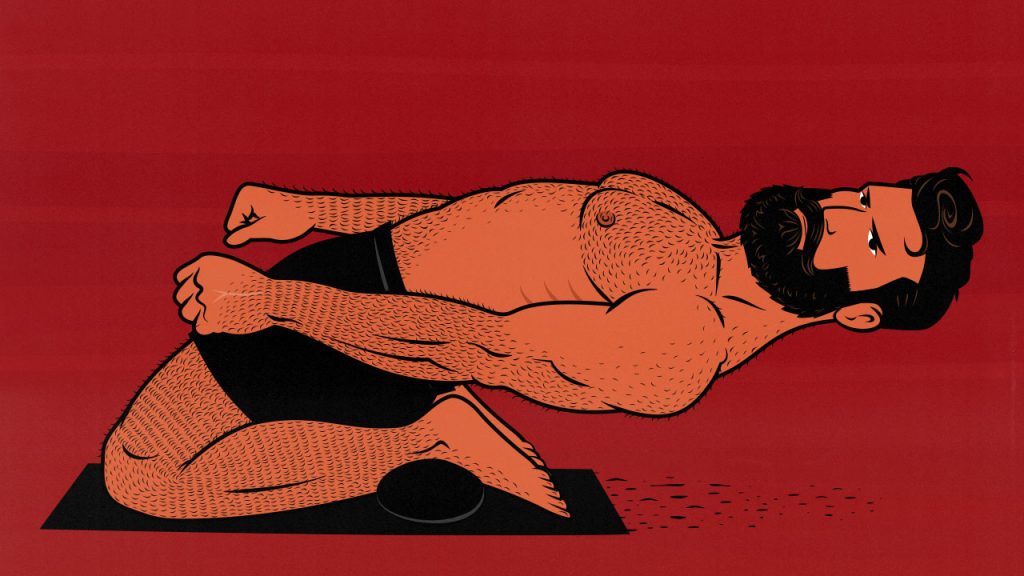
The Best Leg Extension Alternatives
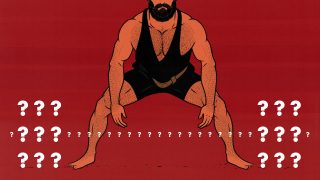
You can do leg extensions at home with just your body weight. It’s a variation called the reverse Nordics (pictured above). They’re hard, though, so I recommend getting good at squatting first. Squats will bulk up your quads just as effectively as leg extensions, and you’ll build the strength you need for reverse Nordics.
Muscles Worked by Leg Extensions
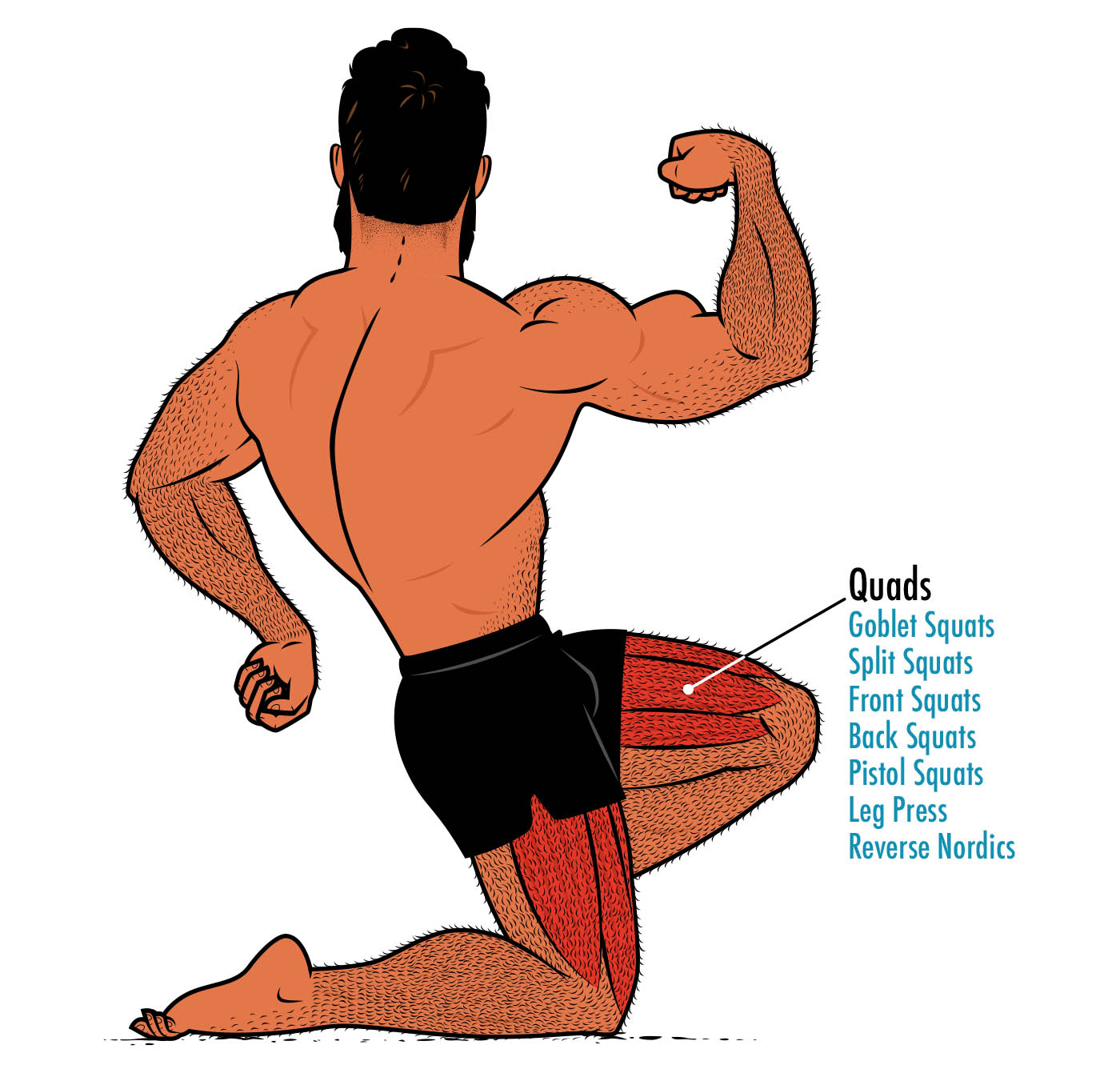
Leg Extensions are Easy to Replace
The best alternatives to leg extensions are squats, kind of. Squats work your quads about as well as leg extensions do, and they have the added benefit of working your glutes and postural muscles. The downside is that they’re more fatiguing and aren’t quite as good for your rectus femoris (study).
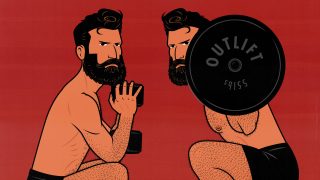
If you want less fatiguing leg extension alternatives, consider lighter squat variations like goblet squats and split squats. Even front squats and back squats are easy on your spine when compared to deadlift variations (like conventional deadlifts).
Beginners don’t need leg extensions. It’s okay to start with just squats. You can add in bodyweight leg extensions when you’re ready for them, starting with easy variations and working your way harder. Let’s talk about how to do that.
Reverse Nordics (Bodyweight)
Reverse Nordics are a surprisingly good exercise. They work your quads through a deep range of motion, challenging them under a deep stretch, thus stimulating quite a lot of muscle growth (full explanation). They’re also great for developing postural strength. They’re at least as good as regular leg extensions.
The only problem is that they’re more complicated. You’ll probably prefer having a mat under your knees. You might want some sort of pad under your ankles. And you might need to hold onto a resistance band or rope for assistance.
Dumbbell Leg Extension Alternatives
Dumbbell Goblet Squat
However, there will come a day when you grow too strong for goblet squats. When that day comes, you can hold two dumbbells (a dumbbell front squat) or train your legs one by one (the dumbbell split squat).
Double-Dumbbell Front Squats
When you grow too strong for goblet squats, grab a second dumbbell. Rest both of those dumbbells on your shoulders.
Dumbbell Split Squat
The dumbbell split squat is another way to get more stimulation out of less weight. You can hold a dumbbell in each hand and train your legs one by one. If that ever gets too easy, you can raise your back foot up on a bench, doing “Bulgarian” split squats.
Barbell Leg Extension Alternatives
Barbell Back Squat
The barbell back squat is the best barbell leg extension alternative. I recommend using a classic “high-bar” squatting style, where you rest the barbell on top of your traps, sit down into the squat, and go as deep as you can. That way, you put more emphasis on your quads and less on your hips and spinal erectors, making it more similar to a leg extension.
Barbell Front Squat
Front squats are my favourite squat variation. They allow most people to train their quads through a deep range of motion, similar to a leg extension. However, they demand a tremendous amount of postural strength, especially in your upper back. That’s a good thing. You’ll build a stronger posture. But it means they’re quite a bit more difficult and tiring than leg extensions.
Alright, that’s it for now. To quickly summarize, start by replacing leg extensions with your favourite squat variation. If you need more volume, you can do more sets or add a second variation (e.g. 4 sets of goblet squats + 2 sets of dumbbell split squats). Then, when you’re ready for more, you can add in reverse Nordics. Be patient. They take practice.

Shane Duquette is the co-founder of Outlift, Bony to Beastly, and Bony to Bombshell. He's a certified conditioning coach with a degree in design from York University in Toronto, Canada. He's personally gained 70 pounds and has over a decade of experience helping over 10,000 skinny people bulk up.

Marco Walker-Ng is the co-founder and strength coach of Outlift, Bony to Beastly, and Bony to Bombshell, and is a certified trainer (PTS) with a Bachelor's degree in Health Sciences (BHSc) from the University of Ottawa. His specialty is helping people build muscle to improve their strength and general health, with clients including college, professional, and Olympic athletes.
Brilliant! Comprehensive and to the point! Amazing Instruction and teaching!!
The Reverse Nordic Curl is one of the best options to try. You kneel on the floor, keep your torso upright, and slowly lean backward by bending your knees, then use your quadriceps to pull yourself back up.
I really liked how you highlighted reverse Nordics as a body‑weight option for leg extensions—it’s a solid move for targeting the rectus femoris. The emphasis on starting with squats before tackling those tough reverse Nordics makes the progression clear.
I’ve always struggled to isolate my quads at home without a machine, so the suggestion to try reverse Nordics is really helpful. I definitely need to focus on my squat strength first, but it’s great to have a clear progression path to follow for when I’m ready to add them in.
Great breakdown! I really like how you highlighted reverse Nordics as a true bodyweight leg extension alternative—most people assume you need a machine to hit the rectus femoris properly. The advice to master squats first before tackling them is spot on.
Thanks for the tips! I never thought about doing leg extensions without a machine. Starting with squats sounds like a good idea. I’ll try these at home.
Great resource for anyone looking to train their quads without relying on leg extensions. The alternatives are practical, and I like that the article explains how to choose an exercise based on your goals and available equipment.
This website is a valuable and impressive resource, offering practical information in a clear, engaging, and user-friendly format. The content is well organized, informative, and genuinely useful. I’ve already recommended it to friends and will continue sharing it with others. It’s great to find a platform that makes discovering new information easy, enjoyable, and worthwhile.
It’s interesting that reverse Nordics are described as being at least as good as regular leg extensions while also challenging the quads under a deep stretch — makes sense that building a squat foundation first would be the smartest way to work up to them.
The point about squats not targeting the rectus femoris as well as leg extensions is worth emphasizing. That fourth head matters for complete quad development, so replacing extensions entirely with squats could leave gaps. I think the smartest approach is keeping both, using reverse Nordics or extensions to isolate what squats miss.
The point about squats not hitting the rectus femoris as well is what sold me on keeping some isolation work. I tried replacing leg extensions entirely with goblet squats last year and my quads felt fine, but I noticed the front of my thigh near the hip lagging. Now I just do reverse Nordics after squats and they cover that gap nicely.
This is a great breakdown of alternatives. I appreciate the emphasis on mastering squats first, as the article mentions, before tackling reverse Nordics. It makes sense for building that foundational quad strength.
If you manage to create the 2048 tile, you can either stop there or keep playing to see how much higher you can go.
Thanks for sharing these leg extension alternatives!
Great tips on leg training! I especially appreciate the breakdown of split squats and the barbell back squat as a leg extension alternative. It’s always a challenge to find ways to get more out of lighter weights or maximize quad activation. Speaking of maximizing engagement, sometimes I find myself wanting a little mental break after a tough leg day – a quick game of Slither io can be surprisingly therapeutic! Thanks for the excellent advice!
The detail that stuck with me is that squats don’t work the rectus femoris as well as leg extensions, which explains why programs pair them after squats instead of choosing one over the other. I used to drop extensions whenever my legs felt fried, not realizing the fourth head was getting shortchanged. For a home setup without machines, do you find split squats close that gap enough, or should I add a hip-flexion move?
Great information! Thanks for sharing this. For more details, useful updates, and complete information, visit our website. ✨
Visit our website for more: